
Chachapoyas and Northern Peru: The Aussie Traveller’s Guide to Cloud Forests and Forgotten Fortresses
Every year, thousands of Australians land in Lima, jump on a plane to Cusco, and spend a week shuffling along the Inca Trail with a few hundred new friends. It’s a bucket-list experience, and we’re not here to talk you out of it. But here’s what we keep telling mates back home: while everyone else is queuing for the classic Inca sites, there’s a whole other Peru in the north — misty cloud forests, orchid-lined trails, and a fortress that makes Machu Picchu look like a latecomer. Chachapoyas is the capital of the Amazonas region, and in our experience it’s the single most underrated destination in the country. We think it deserves a place on every Australian’s Peru itinerary, and this guide explains why.
Why Northern Peru Deserves Your Time
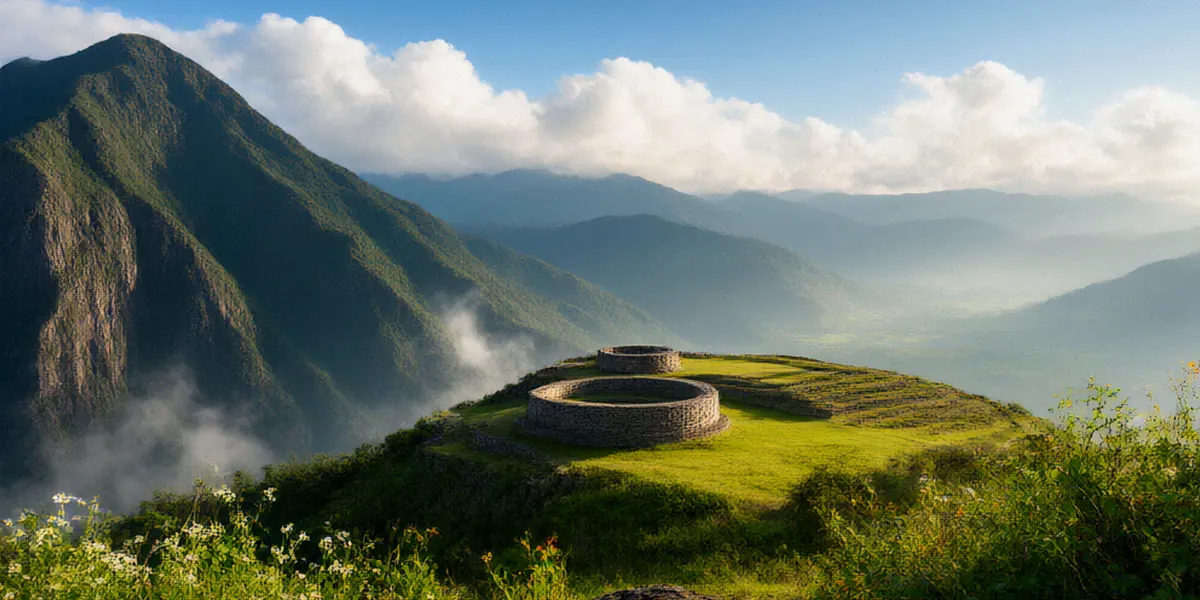
Most Australians fly into Lima and head straight to Cusco, which means the Chachapoyas region sees a fraction of the visitor numbers. That’s good news for you. We’ve walked the ruins of Kuelap on a weekday morning with barely a dozen other people on site — a scenario that’s basically impossible at Machu Picchu. The north also sits at a lower altitude than Cusco, so the acclimatisation is gentler, and the history is entirely different: this is the land of the Chachapoya, a pre-Inca people known as the “Warriors of the Clouds.”
How Chachapoyas Differs from the Inca Heartland
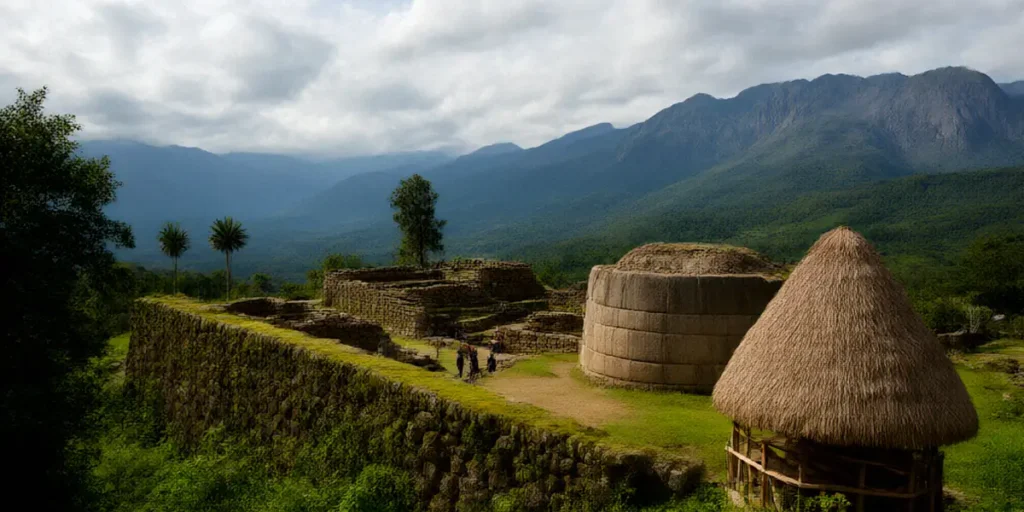
Where Cusco is polished stonework and imperial grandeur, Chachapoyas is moss-covered stone, round houses, and cliffside tombs. The Chachapoya built Kuelap in the cloud forest, fought hard against the Inca, and left behind sarcophagi perched on cliff ledges. The landscape is greener, wetter and steeper than the Sacred Valley, and the towns are smaller and more laid-back. If you’ve already done the Inca Trail, this is the perfect second trip — and if you haven’t, we’d argue for doing both in one go.
Best Time to Visit for Australian Holiday Schedules
The dry season runs from April to October, which lines up neatly with the Australian winter and school holidays. June to August is the busiest and clearest period, but the cloud forest lives up to its name, so expect some rain year-round. We’d aim for May or September to dodge the peak crowds while keeping the trails reasonably dry. If you’re travelling over the Australian summer, the wet season (November to March) means muddier trails and more rain, but also lower prices and spectacularly lush scenery.
Getting There: From Australia to Chachapoyas
There’s no direct flight from Australia to Peru, so the realistic route is a long-haul connection to Lima followed by a domestic flight to the north. The most common domestic carriers are LATAM and Sky Airline, which operate flights from Lima to Jaén — the closest airport to Chachapoyas — as well as to Tarapoto. From Jaén, it’s a scenic bus or colectivo ride of around three to four hours to Chachapoyas. From Tarapoto, expect a longer road trip of roughly six to seven hours. We recommend booking the domestic flight early, especially in peak season, because seats on the Jaén route sell out.
Flight Routes and Stopovers via Santiago or Auckland
From Sydney, Melbourne, Brisbane and Perth, common routes to Lima connect through Santiago, Auckland, or sometimes Los Angeles. The Santiago route is popular with travellers who want to break up the journey, and it’s easy to add a few days in Chile or New Zealand on the way. Total travel time from the east coast is typically 20 to 26 hours depending on the connection, so we suggest planning a rest day in Lima before pushing north.
Overland Options from Chiclayo and Cajamarca
If you’re already exploring the northern coast or the Andes, you can reach Chachapoyas overland. Buses from Chiclayo take around eight to nine hours, and the route from Cajamarca is a similarly long but very scenic drive. These buses are comfortable, but the roads are winding and often foggy, so we’d advise travelling in daylight where possible.
The Must-See Sites of Chachapoyas
Chachapoyas town makes a great base for day trips, and the headline attractions are genuinely world-class. Kuelap fortress, Gocta Falls and the sarcophagi of Karajía are the three we’d prioritise on a first visit, and all three are reachable within a couple of hours of town.
Kuelap: The Fortress in the Clouds
Kuelap fortress predates Machu Picchu and is accessed by cable car from Nuevo Tingo, which cuts out what used to be a long, steep climb. The walls are among the largest stone structures in the Americas, and the site is wrapped in mist and moss. We’d allow at least half a day here, plus time for the cable car and the visitor centre. The cable car is a major attraction in its own right, gliding over the Utcubamba Valley.
Gocta Falls: One of the World’s Tallest Waterfalls
Gocta Falls is one of the world’s tallest waterfalls at 771 metres, and the hike to its base is a solid half-day walk through cloud forest. We’d recommend a guide, sturdy boots and a rain jacket, because the trail gets muddy and the spray is intense. There’s a second viewpoint for the upper section if you’re feeling energetic, and the local villages along the route sell coffee and snacks.
Karajía and the Chachapoya Sarcophagi
The sarcophagi of Karajía are a set of cliffside tombs perched on a ledge, each one shaped like a human figure. They’re a short drive and a steep walk from Chachapoyas, and they’re one of the most striking archaeological sites in the north. We’d combine this with a visit to the nearby town of Lamud, which has a small archaeological museum and a good lunch spot.
Trekking and Adventure in the Cloud Forest
The cloud forest around Chachapoyas is a serious trekking destination, and the humidity is no joke. We’d advise packing quick-dry gear, sturdy boots and a decent rain layer, because the trails are often muddy and the weather changes fast. If you’re after a multi-day challenge, the Laguna de los Cóndores route is the big one.
Multi-Day Treks to Laguna de los Cóndores
The Laguna de los Cóndores trek is a four to five day route through remote cloud forest, ending at a lake where the Chachapoya mummies were discovered. It’s a genuine expedition, so we’d only recommend it with a reputable guide and a decent level of fitness. The trail is steep, wet and often foggy, but the isolation is the whole point.
Day Hikes and Birdwatching Around Chachapoyas
If you’re short on time, day hikes to Revash and the surrounding cloud forest are excellent. Revash is a set of cliffside tombs that’s easy to reach from Chachapoyas, and the birdwatching is superb — the region is home to hummingbirds, tanagers and the iconic marvellous spatuletail. We’d recommend an early start for birdwatching, and a local guide to help you spot the rarer species.
Practical Tips for Australian Travellers
Here’s what we wish we’d known before our first trip north. The good news is that Australians can enter Peru visa-free for up to 183 days as tourists, which gives you plenty of time to explore. The trickier part is money and altitude.
Money, ATMs, and Budgeting in Northern Peru
ATMs in Chachapoyas are unreliable, so bring Peruvian soles from Lima. We’d recommend withdrawing a decent amount at the airport or in a major bank in Lima, and keeping a cash reserve. Budget-wise, we’d allow around 150 to 250 soles per person per day for accommodation, meals and transport, though boutique hotels and guided treks push that higher. Bring a mix of small notes for buses and colectivos.
Health, Altitude, and Safety for Aussies
Chachapoyas sits at around 2,300 metres, which is lower than Cusco, so altitude sickness is less of a concern — but it’s still worth taking it easy on the first day. Travel insurance is essential, and we’d recommend checking that yours covers hiking and remote areas. Spanish basics go a long way, and we’d suggest learning a few phrases before you arrive. The region is generally safe, but as with any travel, keep your valuables secure and avoid walking alone at night.
Where to Stay and Eat in Chachapoyas
Chachapoyas town is the best base, with a compact centre and plenty of options. You’ll find everything from hostels to boutique hotels, and the local food scene is worth exploring.
Accommodation Options for Every Budget
We’d recommend staying near the Plaza de Armas for convenience. Budget hostels and guesthouses are plentiful, while boutique hotels offer more comfort and views. Here’s a quick list of what to consider:
- Hostels and guesthouses for budget travellers, with dorm beds and private rooms
- Mid-range hotels with breakfast and reliable Wi-Fi
- Boutique hotels for a more comfortable stay, often with mountain views
- Eco-lodges in the surrounding cloud forest for a more immersive experience
Local Food and Coffee Culture
Local dishes like cecina (smoked pork) and juanes (rice wrapped in leaves) are worth trying. Vegetarian options are limited but growing, especially in the town centre. The coffee culture is excellent — the region grows some of Peru’s best beans, and there are small cafés serving local brews. We’d suggest visiting a local market for fresh fruit and a cheap, authentic lunch.
Frequently Asked Questions
Do Australians need a visa for Peru?
No. Australians can enter Peru visa-free for up to 183 days as tourists. You’ll need a valid passport and proof of onward travel, but no visa is required.
Is Chachapoyas safe for Australian travellers?
Generally, yes. The region is safe and the locals are welcoming. As with any travel, keep your valuables secure, avoid walking alone at night, and check your travel insurance covers hiking and remote areas.
How do I get to Chachapoyas from Lima?
The most common route is a domestic flight from Lima to Jaén with LATAM or Sky Airline, followed by a three to four hour bus or colectivo to Chachapoyas. You can also fly to Tarapoto and take a longer road trip.
What’s the best time to visit Chachapoyas?
The dry season from April to October is best, with May and September offering a good balance of clear weather and fewer crowds. Expect some rain year-round, as it’s a cloud forest.
How much cash should I bring?
ATMs in Chachapoyas are unreliable, so bring Peruvian soles from Lima. We’d suggest a few hundred soles for a few days, plus a reserve for guided tours and transport.
Northern Peru rewards curious travellers who venture beyond the Gringo Trail. We think Chachapoyas is the perfect addition to your next Peru trip — fewer crowds, a different history, and a fortress that predates Machu Picchu. Add it to your itinerary and you’ll come home with stories most Australians won’t have.