
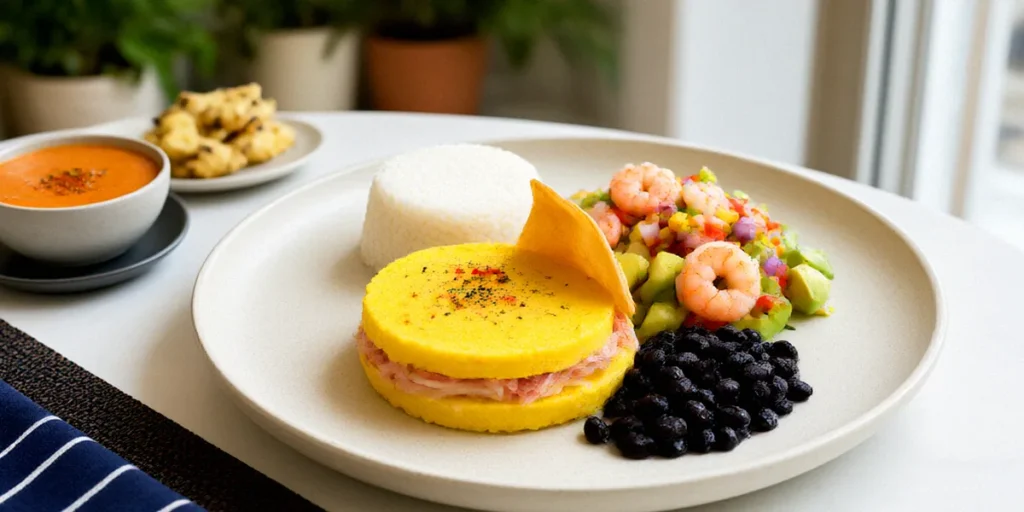
Causa Limeña and Other Dishes to Try on Your Peru Travel Adventure
We still remember the first forkful of Causa Limeña we ate in Lima — cool, silky potato spiked with lime and ají amarillo, with a wedge of avocado hiding underneath. It was the moment we realised that on any Peru travel itinerary, the food isn’t a side note to Machu Picchu and the Inca sites. It’s a highlight in its own right. For Australian travellers used to great coffee, Asian fusion and fresh seafood, Peru’s kitchen feels surprisingly familiar — and completely its own thing at the same time.
Why Peruvian Food Deserves a Spot on Your Peru Travel Itinerary
Peru’s cuisine is one of the most layered in the world. Indigenous Andean ingredients like potatoes, corn and quinoa meet Spanish colonial techniques, African influence in the coastal kitchens, and later waves of Chinese and Japanese migration that created whole new styles of cooking. That mix is why Lima is often called the gastronomic capital of South America — and why we tell every Australian we know to plan meals with the same seriousness as their Machu Picchu tickets.
A Quick History of Peruvian Flavours
The short version: the Inca and pre-Inca civilisations gave Peru thousands of potato varieties, ají chillies and corn. The Spanish brought rice, wheat, beef and pork. Enslaved Africans and later Chinese indentured labourers transformed coastal cooking, and Japanese immigrants in the late 1800s introduced precision with raw fish that shaped modern ceviche and tiradito. The result is a cuisine with genuine depth, not just a few photogenic dishes.
How to Fit Food Experiences Into Your Machu Picchu Trip
You don’t need a dedicated food tour to eat well. A few easy moves:
- Book at least two full days in Lima before or after your Cusco and Machu Picchu leg — Lima rewards slow eating.
- In Cusco, build in a market morning at San Pedro before your Inca Trail departure.
- On the train to Aguas Calientes, order the local set menu rather than the safe option.
- Ask your hotel in the Sacred Valley where their staff actually eat lunch.
Causa Limeña: The Must-Try Starter in Lima
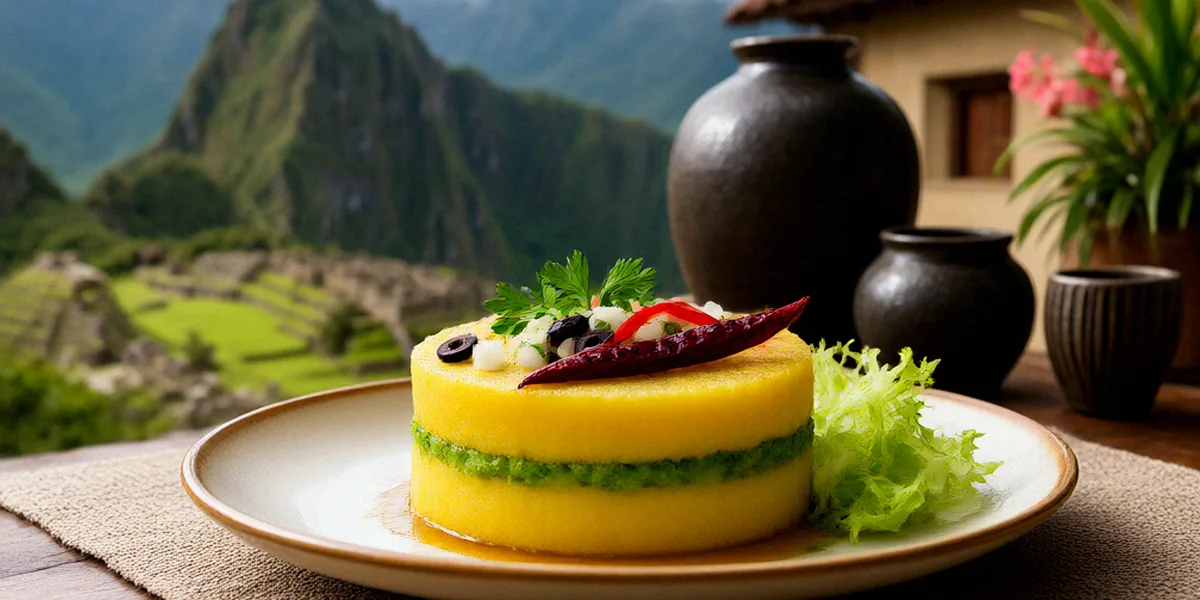
If there’s one dish we’d tell you to order on your first night in Lima, it’s this one. Causa Limeña is a chilled potato terrine with ají amarillo and lime, layered with avocado and usually filled with tuna, chicken or prawns. It’s served cold, which surprises first-timers, but it works beautifully in Lima’s humid coastal climate.
What Exactly Is Causa Limeña?
The base is yellow potato mashed with ají amarillo paste, lime juice and oil until it’s smooth and slightly sticky. It’s pressed into a mould, layered with avocado and a creamy filling, then topped with something like a prawn or a slice of tomato. The dish is naturally gluten-free, which makes it a safe and easy starter for coeliac travellers — just confirm the filling hasn’t been thickened with wheat flour.
Where to Find the Best Causa in Lima
Head to a cevichería in Miraflores or Barranco and you’ll find it on almost every menu. We’ve had excellent versions at La Mar in Miraflores and at smaller neighbourhood spots in Barranco where the causa is served with a single prawn on top and nothing else. Order it as a starter, share it, and follow with ceviche.
Ceviche and Other Coastal Classics
Ceviche is Peru’s national dish, made with fresh fish cured in lime juice with red onion, ají limo and coriander. Australians are used to strong seafood, but ceviche here is different — the fish is often only briefly cured, so it stays soft and slightly translucent. It’s served at lunchtime, rarely at dinner, because Peruvians believe the fish is freshest earlier in the day.
Ceviche: Peru’s National Treasure
We’d suggest skipping street ceviche unless you’re confident about the vendor’s turnover and refrigeration. Instead, book a table at a reputable restaurant — La Mar and Punto Azul in Lima are two we keep coming back to. The classic version uses sea bass, but you’ll also see sole, tuna and even shellfish variations.
Tiradito and Leche de Tigre
Tiradito is ceviche’s Japanese-Peruvian cousin — sliced thin like sashimi, dressed in ají amarillo or rocoto sauce rather than heavy lime. Leche de Tigre is the leftover marinade, served as a shot or in a glass with bits of fish and cancha corn. It’s a great hangover cure, apparently, though we’ve only ever tested that theory on holiday.
Highland Dishes to Try in Cusco and the Sacred Valley
Once you climb into the Andes, the food changes. Portions get bigger, sauces get richer, and potatoes appear at every meal in forms you’ve never seen. Cusco’s San Pedro Market is the best single stop for adventurous eaters, and many trekkers on the Inca Trail will encounter versions of these dishes at campsites and trail lodges.
Lomo Saltado: The Chinese-Peruvian Stir-Fry
Lomo saltado is a Chinese-Peruvian stir-fry of beef strips, onion, tomato and soy sauce, served with chips and rice. Yes, chips and rice on the same plate. It sounds odd and tastes fantastic, especially after a long day of walking around Inca sites.
Aji de Gallina and Rocoto Relleno
Aji de Gallina is shredded chicken in a creamy yellow ají sauce, served with rice, olives and boiled potato. Rocoto Relleno is a stuffed spicy pepper from Arequipa, filled with minced beef, egg and cheese. Both are hearty, warming and perfect for Cusco’s cool evenings.
Cuy and Alpaca: For the Adventurous
Cuy (guinea pig) is roasted whole and served as a festive dish in the highlands. Alpaca is leaner than beef and often served as steak or in stews. We’d say try at least one of them — not for shock value, but because they’re genuinely part of Andean food culture.
Street Food and Markets: Eating Like a Local
Street food in Peru can be excellent, but hygiene varies. Stick to stalls with high turnover, watch the food being cooked in front of you, and always drink bottled water — including for brushing your teeth if you’re sensitive. In Cusco, the San Blas neighbourhood has great cafes and bakeries where you can eat comfortably between sightseeing.
Anticuchos and Empanadas
Anticuchos are skewers of marinated beef heart, grilled over charcoal and served with boiled potato and ají sauce. Empanadas come baked or fried, filled with cheese, beef or chicken. Both are cheap, filling and easy to find in the late afternoon.
Churros and Picarones
Churros in Peru are often filled with dulce de leche and dusted with sugar. Picarones are doughnut-like rings made from squash and sweet potato, drizzled with chancaca syrup. They’re a classic street dessert and worth trying at least once.
What to Drink: Pisco Sours, Chicha and Coffee
Peru’s drinks are as distinctive as its food, and a few of them will feel very familiar to Australian palates.
Pisco Sour: The National Cocktail
The pisco sour is Peru’s signature cocktail — grape brandy, lime juice, egg white, sugar syrup and a dash of bitters. It’s tart, foamy and dangerously easy to drink. Every bar in Lima and Cusco has its own version, and we’ve yet to find a bad one.
Chicha Morada and Chicha de Jora
Chicha morada is a sweet, non-alcoholic drink made from purple corn, pineapple and spices. Chicha de Jora is a fermented corn beer, often home-brewed in the highlands and served in large glasses at family-run spots. Try it once — it’s an acquired taste.
Peruvian Coffee for Aussie Caffeine Lovers
Peru grows excellent coffee, and Cusco’s specialty coffee scene has exploded in the last few years. You’ll find flat whites and pour-overs in San Blas that would pass muster in Melbourne. The beans are often single-origin from the Sacred Valley, so it’s worth buying a bag to bring home.
FAQ
Is Causa Limeña gluten-free?
Yes, traditionally it is — the base is potato, ají amarillo, lime and oil. Just check the filling, as some versions use breadcrumbs or flour as a thickener.
Is it safe to eat ceviche in Peru?
At reputable restaurants, yes. We’d avoid street ceviche and stick to busy cevicherías like La Mar or Punto Azul in Lima, especially on your first few days.
What is lomo saltado made of?
Lomo saltado is a Chinese-Peruvian stir-fry of beef strips, red onion, tomato, soy sauce and sometimes ají, served with chips and rice.
Can vegetarians eat well in Peru?
Yes, though it takes a bit more effort outside Lima and Cusco. Look for dishes like causa, papa a la huancaína, quinoa soups and vegetable-based saltados.
Should I drink tap water in Peru?
No. Stick to bottled or filtered water throughout your trip, including in Cusco and on the Inca Trail, and use it for brushing your teeth if you have a sensitive stomach.
Food is one of the fastest ways to understand Peru. It tells you about the country’s history, its geography and the people who cook it every day. Our advice for your Peru travel adventure is simple: try at least one new dish every day, order the thing you can’t pronounce, and let Causa Limeña be the gateway.