
Lima’s Historic Centre: A Walking Guide
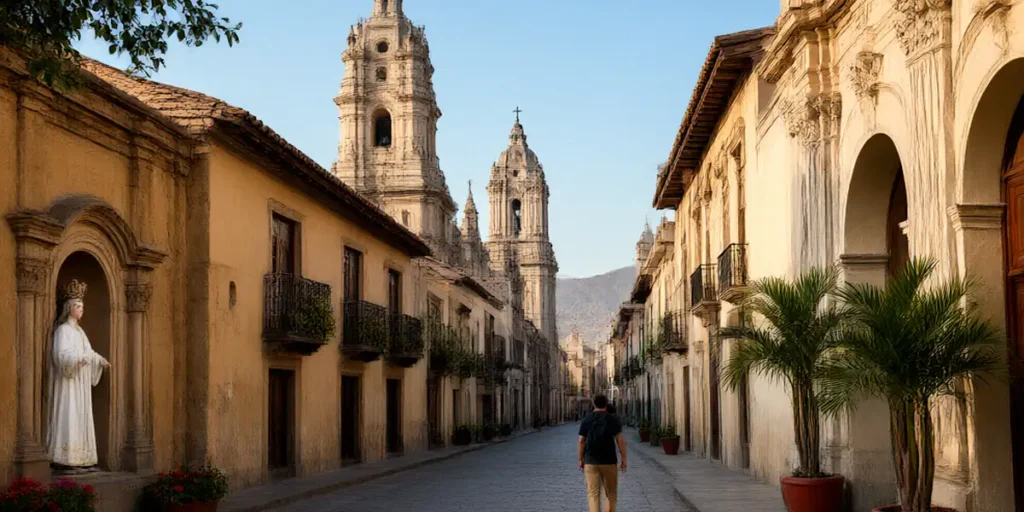
Lima hits you before you’ve even cleared customs — a sprawling, horn-honking beast of ten million people where buses career between lanes and street vendors call out over the roar of traffic. Then you turn a corner near the Plaza Mayor, and everything changes. The noise softens, the buildings straighten into colonial arcades, and you’re standing in a UNESCO World Heritage Site that has been the heart of Spanish South America since the 1500s. We think every Australian traveller should spend at least one full day here before flying on to Cusco or catching the train to Machu Picchu. It’s not just a stopover — it’s the best possible introduction to the country you’re about to explore.
Why Start Your Peru Travel in Lima’s Historic Centre?
For most Australians, Lima is the arrival point. Qantas and LATAM offer flights from Sydney and Melbourne to Lima with one stop (e.g., via Santiago or Auckland), which means you’ll almost certainly land at Jorge Chávez International Airport before you see any other part of Peru. Rather than rushing straight to a connecting flight, we recommend spending a night or two in the capital — partly to shake off the jet lag, and partly to acclimatise gently before you hit the thin air of Cusco at 3,400 metres.
The historic centre itself is compact and walkable. You can cover the main sights in three to four hours on foot, which makes it ideal for a first day when your body clock is still somewhere over the Pacific. The historic centre of Lima has been a UNESCO World Heritage Site since 1988, recognised for its concentration of colonial architecture, balconies, and religious monuments.
A quick history: from the Inca to the Spanish Viceroyalty
The area around Lima was home to the Lima and Ychma cultures long before the Inca arrived, and the Inca themselves considered the nearby Pachacámac oracle one of the most important pilgrimage sites on the coast. When Francisco Pizarro founded the city in 1535, he built it directly on top of existing settlements and named it the “City of Kings.” For nearly three centuries it served as the capital of the Spanish Viceroyalty of Peru, governing an empire that stretched from Panama to Argentina. That history is why the centre looks the way it does — grand churches, carved wooden balconies, and plazas laid out on a grid that predates most Australian cities.
Safety and timing tips for Aussie walkers
We won’t pretend the historic centre is as relaxed as a stroll through Melbourne’s laneways. It’s busy, and petty theft does happen. A few things we always do:
- Walk the main route during daylight hours, ideally between 9am and 4pm.
- Keep your phone in your pocket rather than in your hand while walking.
- Use Uber or a hotel-arranged taxi after dark rather than hailing cabs on the street.
- Carry a small daypack you can wear on your front in crowded areas.
- Avoid displaying expensive cameras or jewellery.
Essential Stops on Our Walking Route
Our preferred loop starts and finishes at the Plaza Mayor and takes three to four hours at an easy pace, including stops for photos and coffee. We suggest starting by 9am to beat the tour groups and the midday heat.
Plaza Mayor and its key buildings
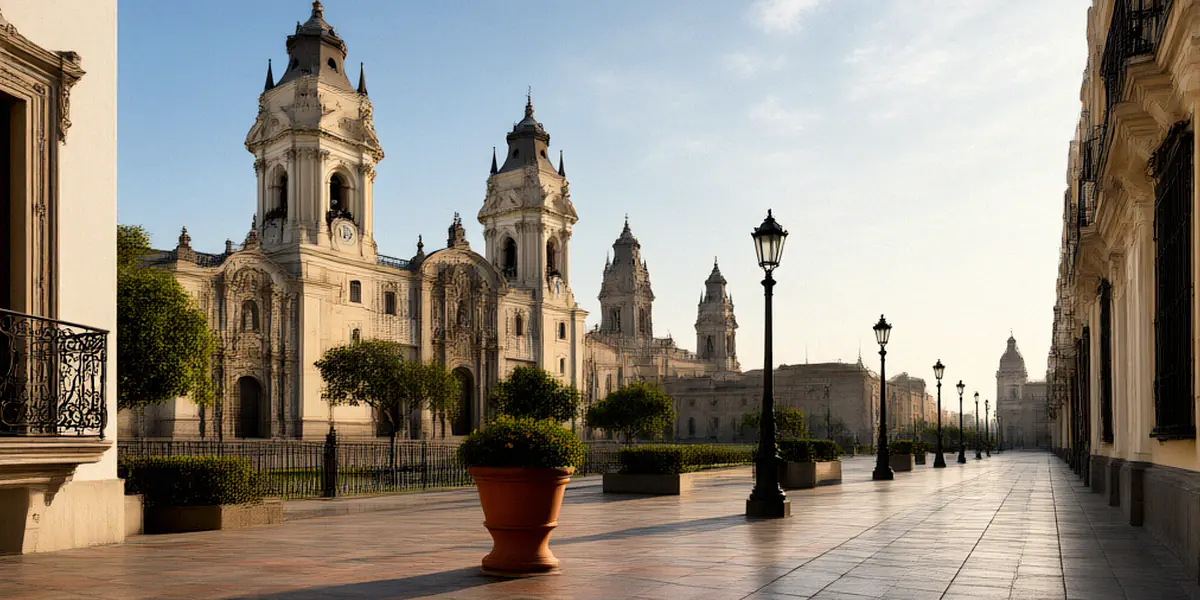
The Plaza Mayor is the founding square of Lima and the natural starting point. On its northern side sits the Palacio de Gobierno, on the east the Cathedral of Lima, and on the south a row of colonial buildings with the famous wooden balconies. The square is free to enter and open at all hours, though we’d stick to daylight. Take ten minutes to just stand in the middle and look around — the scale of the colonial architecture is something photos don’t quite capture.
Cathedral of Lima and the Archbishop’s Palace
The Cathedral of Lima (open roughly 9am–5pm Monday to Friday, shorter hours on weekends) houses the tomb of Francisco Pizarro and an impressive collection of religious art and silverwork. Entry is a modest fee, and audio guides are available. Next door, the Archbishop’s Palace is recognisable by its striking neo-colonial wooden balconies — one of the most photographed facades in the city. You can’t always go inside, but the exterior alone is worth the stop.
Palacio de Gobierno and the changing of the guard
The Palacio de Gobierno occupies the site of Pizarro’s original residence and is still the working seat of Peru’s president. If your timing works, the changing of the guard takes place at midday — check locally, as the schedule shifts. Even if you miss it, the palace’s ornate facade and the adjoining courtyard are worth a look from the plaza.
Beyond the Main Square: Hidden Gems We Love
Once you’ve ticked off the headline sights, the real charm of the historic centre shows up in its side streets. These are the spots we keep coming back to.
San Francisco Convent and catacombs
The Basilica and Convent of San Francisco is famous for its catacombs and colonial library, and it’s one of the most atmospheric stops in Lima. The catacombs once served as the city’s main burial site, and the library holds thousands of antique texts. Guided tours run throughout the day and take around 45 minutes. Note that photography isn’t allowed inside.
Casa de la Literatura and Plaza San Martín
The Casa de la Literatura Peruana is housed in a converted train station and offers free entry — a welcome break for the budget-conscious traveller. From there, walk ten minutes to Plaza San Martín, a grand square with a central monument to the liberator José de San Martín and plenty of benches for people-watching.
ChocoMuseo and Pisco tasting
The ChocoMuseo runs chocolate-making workshops where you can grind your own cacao and learn how Peruvian chocolate is produced — a great activity if you’re travelling with kids or just want something hands-on. Later, head to the Museo del Pisco for a tasting. The Pisco Sour is Peru’s national drink, and the Museo del Pisco in Lima offers guided tastings that explain the difference between pisco and its Chilean cousin. We always take a break here.
Where to Eat and Drink Like a Local (and an Aussie)
Lima is one of the food capitals of South America, and the historic centre holds its own against the fancier districts. These are our go-to spots.
Lunch spots: Bar Cordano and Tanta
Bar Cordano, right beside the Palacio de Gobierno, has been serving criollo sandwiches and cold beer since 1905. It’s a historic Cordano bar in every sense — tiled floors, waiters in bow ties, and a menu that hasn’t changed much in a century. Tanta, run by celebrity chef Gastón Acurio, offers Peruvian comfort food like lomo saltado and causa in a more modern setting. Both accept major credit cards, including Australian ones.
Coffee and sweets: Pastelería San Antonio
For a mid-afternoon sugar hit, Pastelería San Antonio is a Lima institution. Their alfajores and pionono are excellent, and the coffee is reliably good. It’s a comfortable spot to sit down and rest your legs.
Pisco and cocktails: Museo del Pisco
As mentioned, the Museo del Pisco is our pick for an end-of-walk drink. Order a classic Pisco Sour, and if you’re feeling adventurous, try a chilcano — pisco with ginger ale and lime.
Practical Tips for Australian Travellers
Money and ATMs: what we do
The currency is the Peruvian sol. Australian travellers should carry Peruvian soles for small purchases; ATMs at Banco de Crédito are reliable and widely available around the historic centre. We usually withdraw a few hundred soles at a time and keep small notes for taxis, markets, and tips.
Staying safe: our team’s advice
Keep your phone hidden when you’re not using it, avoid walking alone late at night, and use Uber after dark rather than street taxis. If you’re continuing to Cusco or Machu Picchu, we recommend travel insurance that covers high-altitude activities — standard policies often exclude them.
Language and etiquette: a few Spanish phrases
Basic Spanish helps enormously. Learn “buenos días,” “gracias,” “por favor,” and “¿cuánto cuesta?” A smile and an attempt at the language go a long way here.
Extending Your Walk: Nearby Attractions
Museo de Arte de Lima (MALI)
MALI sits just outside the historic centre and holds an excellent collection of Peruvian art from pre-Columbian times to the present. Allow two hours.
Circuito Mágico del Agua
In the evening, the Circuito Mágico del Agua in Parque de la Reserva puts on a fountain and light show that’s genuinely impressive. It’s a short taxi ride from the centre.
Miraflores and Barranco for evening
We often book a taxi to Miraflores for dinner after a day of walking. Barranco, just south, has a bohemian vibe and great bars if you want to keep going.
FAQ
Is Lima’s historic centre safe for Australian tourists?
Yes, during daylight hours and if you take basic precautions. Keep valuables out of sight, avoid quiet streets after dark, and use Uber or hotel taxis at night.
How long do I need to explore the historic centre?
We recommend a full day — three to four hours for the main walking route, plus time for lunch and a museum or two.
Do I need cash or can I use my Australian credit card?
Most restaurants and larger shops accept Australian credit cards, but carry Peruvian soles for small vendors, taxis, and markets. ATMs at Banco de Crédito are reliable.
Should I visit Lima before or after Cusco?
Before. Lima sits near sea level, so it’s a gentler introduction to Peru than Cusco’s high altitude. Give yourself a day or two here to adjust.
What’s the best time of day to walk the historic centre?
Start by 9am. You’ll beat the tour groups, catch softer light for photos, and finish before the midday heat.
Lima rewards travellers who slow down. Yes, the traffic is chaotic and the city can feel overwhelming at first — but that’s exactly what makes the historic centre such a contrast. Treat it as a highlight of your Peru travel itinerary, not just a stopover on the way to Machu Picchu. Walk the plazas, eat the sandwiches, drink the Pisco Sours, and give yourself permission to wander. You’ll arrive in Cusco or the Sacred Valley far better prepared for everything that comes next.