
Arequipa and El Misti: Our Honest Guide for Australian Travellers
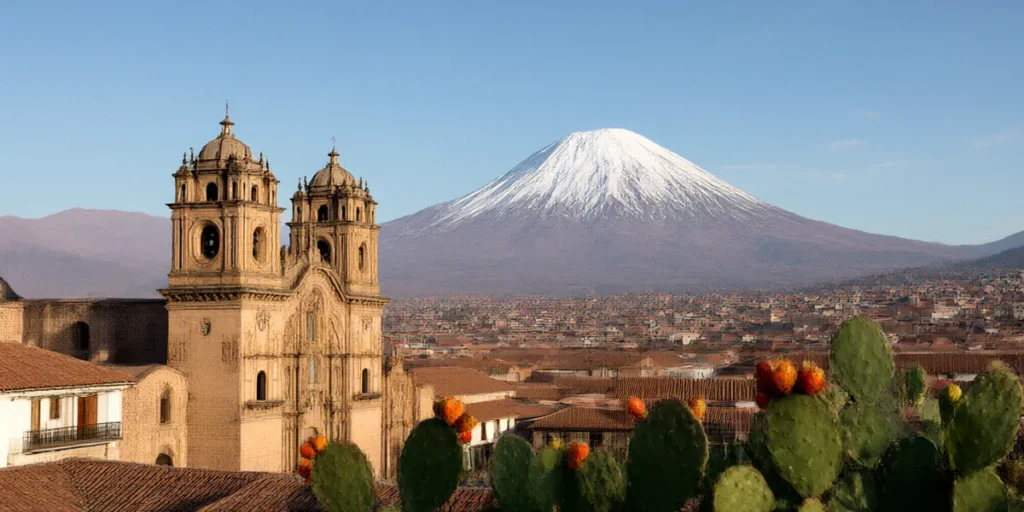
There’s something about Arequipa that feels strangely familiar to Australians. Maybe it’s the dry, sunburnt landscape that rolls out toward distant peaks, or the way the afternoon light hits the white volcanic stone (sillar) the city is built from. Swap the eucalypts for Andean grasses and the red dust for pale sillar, and you could almost be somewhere outside Alice Springs — except here, three snow-capped volcanoes loom over the plaza, and one of them, El Misti, is climbable. At 2,335 metres, Arequipa sits high enough to feel the altitude but low enough to enjoy a proper coffee. For Aussies chasing Peru travel that goes beyond the usual Lima–Cusco–Machu Picchu sprint, Arequipa and El Misti deserve a firm spot on your itinerary.
Why Arequipa Belongs on Your Peru Travel Itinerary
Most Australian travellers land in Lima, fly straight to Cusco, tick off Machu Picchu, and head home. That’s a great trip — but it skips one of Peru’s most rewarding cities. Arequipa gives you colonial architecture, world-class food, and volcano access without the crowds or the punishing altitude of Cusco. It’s also the perfect place to acclimatise before you go higher.
The White City and Its Volcanic Backdrop
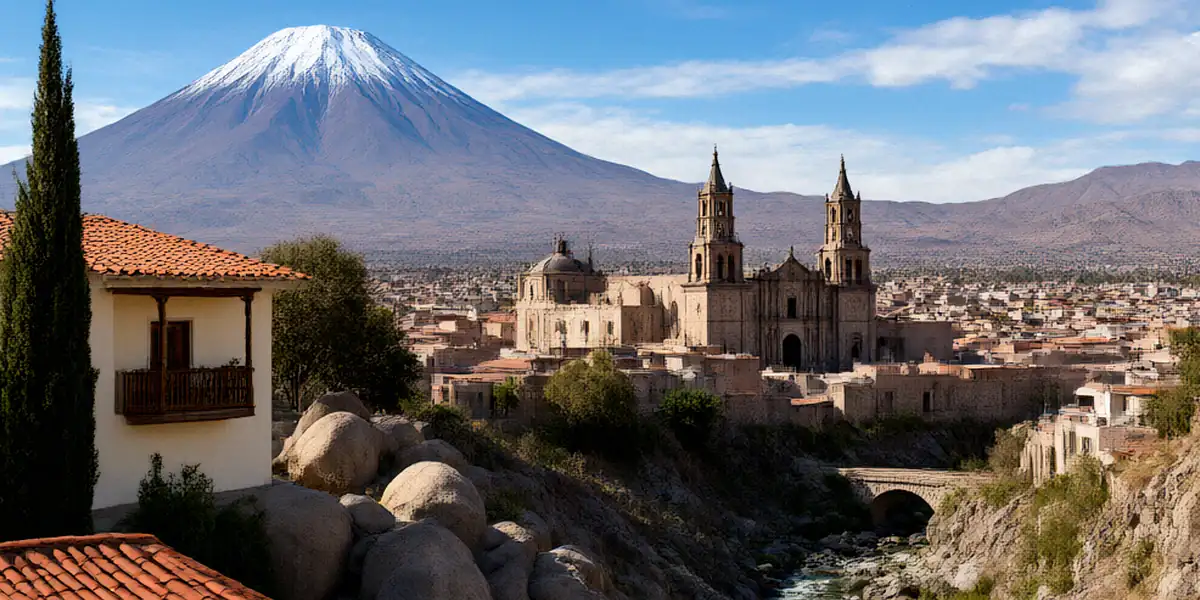
Arequipa’s historic centre is a UNESCO World Heritage Site, and it earns the title. The Plaza de Armas is framed by a cathedral built from sillar, a white volcanic rock that glows pink at sunset. Behind it all stands El Misti (5,822m), flanked by Chachani and Pichu Pichu. The city’s most famous landmark is the Santa Catalina Monastery, a 16th-century convent that operated as a closed city within a city for centuries. You can wander its colour-saturated streets — ochre, azure, terracotta — for hours. Entry is around S/40–45 (roughly AUD $18–20), and we recommend going early to beat the tour groups.
How Arequipa Fits With Cusco and Machu Picchu
Think of Arequipa as the southern anchor of a classic Peru route. You can fly into Lima, bus or fly south to Arequipa, acclimatise, hike El Misti or visit Colca Canyon, then continue to Cusco and the Sacred Valley before finishing at Machu Picchu. This south-to-north flow lets your body adjust gradually — Arequipa’s 2,335m is a gentle step up before Cusco’s 3,400m. For Australians escaping a July winter, this route also lines up with Peru’s dry season (May to September), which is prime trekking weather.
Getting to Arequipa from Australia
There’s no direct route from Australia to Peru, so plan for at least one connection — usually two. The good news is that the journey is well-trodden, and a few airlines make it relatively painless.
Flight Routes and Airlines We Recommend
Most Aussies fly Sydney or Melbourne to Santiago with Qantas or LATAM, then connect to Lima with LATAM Airlines. From Lima, it’s a short 1.5-hour flight to Arequipa (Rodríguez Ballón International Airport). Alternatively, you can route through Auckland and Houston or Dallas, but the Santiago option tends to be smoother and often cheaper.
- Qantas + LATAM: Sydney/Melbourne → Santiago → Lima → Arequipa
- LATAM Airlines: Direct Sydney–Santiago service, then onward connections
- Air New Zealand + United: Auckland → Houston → Lima (longer but sometimes cheaper)
Bus vs Flight: What Our Team Prefers
From Lima, you’ve got two realistic options. The flight takes about 90 minutes and costs roughly AUD $80–150 one way. The bus, run by Cruz del Sur, takes 16–18 hours overnight but is surprisingly comfortable — reclining seats, meals, and movies. We’ve done both. If you’re short on time, fly. If you want to save money and don’t mind losing a night, the Cruz del Sur bus is a genuinely decent experience and lets you see the coastal desert roll by.
Acclimatising to Arequipa’s Altitude
At 2,335m, Arequipa is high enough that some travellers feel it, but low enough that most adjust within a day or two. Still, don’t treat it lightly — especially if you’re heading to El Misti or Cusco next.
Symptoms to Watch For
Mild altitude symptoms include headache, shortness of breath on stairs, fatigue, and disturbed sleep. More serious signs — vomiting, confusion, or a persistent cough — mean you need to descend and seek medical help. Arequipa’s altitude is rarely dangerous on its own, but it’s a warning sign for what’s coming if you push too fast.
Our Altitude Prep Routine
Here’s what we do, and what we suggest for Aussies arriving from sea level:
- Book at least two nights in Arequipa before any trek or flight to Cusco.
- Drink mate de coca (coca tea) — it’s everywhere, cheap, and genuinely helps.
- Hydrate aggressively: 3+ litres of water a day, no alcohol on night one.
- Eat light, carb-heavy meals — quinoa soup and rocoto relleno are perfect.
- Walk, don’t sprint. Take the stairs slowly. Your body will thank you.
Hiking El Misti: What Australians Need to Know
El Misti isn’t a technical climb, but it’s a serious one. The standard route is a two-day guided trek: you drive from Arequipa to around 3,400m, hike to base camp at 4,600m, sleep (badly), then start the summit push around 2–3am to reach the 5,822m crater by sunrise. The reward is a view over Arequipa, Chachani, and on clear days, the distant Andes.
Guided Tours and Costs
You can’t legally climb El Misti without a registered guide, and honestly, you shouldn’t want to. Operators like Carlos Zarate Adventures run reputable two-day trips for around USD $150–250 per person, including transport, meals, camping gear, and a guide. Book at least a week ahead in high season (May–September).
Fitness, Gear, and Safety
You need solid cardiovascular fitness — this is a long, steep slog at altitude, not a stroll. Bring layered clothing, a warm sleeping bag (rentals available), sunglasses, sunscreen, and 3+ litres of water. The pre-dawn start is brutal but necessary: you want to be off the summit before afternoon clouds and wind roll in.
Food, Culture, and Day Trips Around Arequipa
Arequipa’s food scene is a legitimate rival to Lima’s, and for Australian palates used to bold, spicy flavours, it’s a joy.
Must-Try Dishes and Markets
Start with rocoto relleno — a stuffed spicy pepper, usually filled with minced meat, cheese, and topped with melted cheese. Then try queso helado, a cinnamon-dusted frozen dessert that’s nothing like ice cream but completely addictive. The Mercado San Camilo is the place to graze: fresh juices, tamales, and local cheeses.
Colca Canyon and Other Day Trips
The big one is Colca Canyon, one of the world’s deepest canyons and home to Andean condors. Most tours leave Arequipa at 3am, stop at Cruz del Cóndor for the morning condor sightings, and return by evening. It’s a long day but worth it. Other options include the Sillar Route (the quarries that built the city) and rafting on the Río Chili.
Inca Sites and Machu Picchu: Connecting the Dots
Once you’ve acclimatised in Arequipa, it’s time to head toward the Inca heartland. This is where your Peru travel planning really pays off.
Route Options from Arequipa to Cusco
You can fly (1 hour, ~AUD $100) or take a bus (10–12 hours). Many travellers break the journey at Colca Canyon or Puno and Lake Titicaca. Once in Cusco, the classic route runs through the Sacred Valley — Pisac, Ollantaytambo, and the Inca sites of Moray and Maras — before you board PeruRail to Aguas Calientes, the gateway to Machu Picchu.
Booking Machu Picchu and Inca Trail Permits
Inca Trail permits sell out months in advance — sometimes 4–6 months for the May–September window. Machu Picchu entry tickets are also capped and timed. Book both before you leave Australia. If the Inca Trail is sold out, the Salkantay or Lares treks are excellent alternatives, and you can still reach Machu Picchu by PeruRail from Ollantaytambo or Cusco.
FAQ
Is Arequipa worth visiting for Australian travellers?
Absolutely. It offers colonial architecture, excellent food, volcano trekking, and Colca Canyon — all with milder altitude than Cusco. It’s a natural stop between Lima and the Inca heartland.
How do I get from Australia to Arequipa?
Fly Sydney or Melbourne to Santiago with Qantas or LATAM Airlines, connect to Lima, then take a short LATAM flight or an overnight Cruz del Sur bus to Arequipa.
Do I need to acclimatise before hiking El Misti?
Yes. Spend at least two nights in Arequipa, hydrate well, drink mate de coca, and avoid alcohol before the trek. El Misti’s 5,822m summit is no joke.
Can I combine Arequipa with Machu Picchu?
Yes — it’s one of the best routes in Peru. Travel from Arequipa to Cusco, explore the Sacred Valley, then take PeruRail to Machu Picchu. Book Inca Trail permits months ahead.
What’s the best time of year to visit Arequipa and El Misti?
May to September is the dry season and the best window for trekking. It also aligns nicely with an Australian winter escape.
Arequipa and El Misti reward travellers who slow down. Build in buffer days for altitude, book your El Misti trek and Machu Picchu permits early, and let the White City ease you into the Andes before you tackle Cusco and the Inca Trail. For more route ideas, packing lists, and destination guides, explore our other Peru travel tips — we’ve done the legwork so you can focus on the views.