
Sacsayhuamán and Other Sites around Cusco: A Guide for Australian Travellers
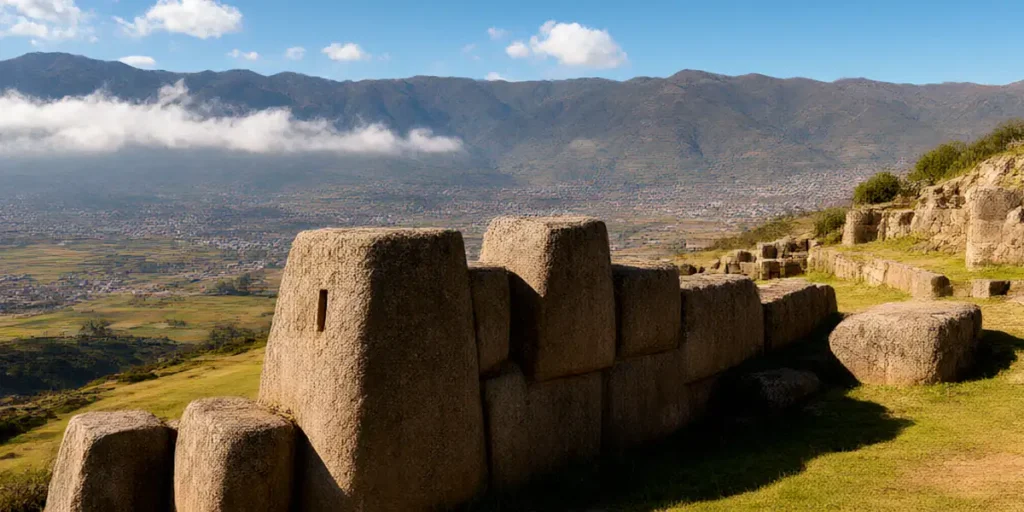
We stood on the grassy esplanade below Sacsayhuamán, hoodies zipped to the chin, as wind tore across the altiplano and dust swirled around our boots. Above us, three tiers of zigzag walls rose like the teeth of some vast stone creature, each block so tightly fitted that not even a credit card would slide between them. That was the moment it hit us: Cusco is not just a launching pad for Machu Picchu. It is a destination in its own right, ringed by Inca engineering that rivals anything you will see at the famous citadel.
Why Cusco Is More Than a Stopover
Most travellers treat Cusco as a one-night pit stop before catching the train to Aguas Calientes. We nearly did the same, and we would have regretted it. The city was the capital of the Inca Empire — known then as Qusqu — and its colonial centre is literally built on Inca foundations. Spanish churches sit atop sun temples, and narrow cobbled lanes follow the lines of ancient canals.
The city sits at roughly 3,400 metres, which is higher than anything in Australia by a wide margin. Mount Kosciuszko tops out at 2,228 metres, so unless you have spent time in the Andes or the Himalayas, your body will notice the thin air. Give yourself time to adjust before you start climbing ruins.
Acclimatising in Cusco: What We Learned the Hard Way
Our first day, we tried to power through a walking tour straight off a long-haul flight. Bad idea. By mid-afternoon, two of us had headaches that felt like a vice and one of us was dizzy enough to sit out dinner. The fix is simple: take it easy on day one.
- Drink more water than you think you need — two to three litres a day minimum.
- Skip alcohol and heavy meals for the first 24 to 48 hours.
- Drink coca tea (mate de coca), which is available everywhere and genuinely helps.
- Consider a short course of acetazolamide (Diamox) — talk to your GP in Australia before you fly.
- Book a hotel in the lower part of town if you can; the climb back up to San Blas will humble you.
How Many Days Should You Actually Spend Here?
We would suggest a minimum of three full days in Cusco before heading to Machu Picchu, and five if you want to do the surrounding ruins and a Sacred Valley day trip properly. That gives you one day to acclimatise, one for Sacsayhuamán and the nearby sites, and one for the valley. Anything less and you are just ticking boxes.
Sacsayhuamán: The Inca Fortress That Defies Belief
Perched on a hill just north of the historic centre, Sacsayhuamán is the showstopper. The walls run in three parallel zigzag tiers, and the largest stones are estimated to weigh more than 300 tonnes each. Standing beside them, you feel genuinely small. From the top, you get a sweeping panorama over Cusco’s red-tiled roofs, with the white statue of Cristo Blanco watching from the next ridge.
Every 24 June, the site hosts Inti Raymi, the Inca Festival of the Sun. It is a full-scale re-enactment with costumed performers, and it draws crowds from across Peru and beyond. If you are in Cusco in late June, book tickets well in advance.
The Engineering Puzzle of the Megalithic Walls
Here is what keeps archaeologists up at night: the stones were fitted without mortar, and they are so precisely shaped that they hold together through centuries of earthquakes. No one knows exactly how the Inca moved and shaped blocks of that size without wheels, iron tools, or draft animals. Theories range from ramps and levers to thousands of labourers working in coordinated shifts. Whatever the method, the result is one of the most impressive pieces of ancient engineering on the planet.
Best Time to Visit and How to Avoid the Crowds
Go early. The gates open around 7am, and if you are there within the first hour, you will have whole sections of the walls to yourself. By 10am, tour groups arrive in waves. Late afternoon, around 3pm to 5pm, is the second-best window. The dry season from May to September offers the clearest skies, though June and July are the busiest months.
Other Inca Sites within Reach of Cusco
Four sites sit within a short drive or walk of the city, and all of them are covered by the Boleto Turístico (General Tourist Ticket), which costs around S/130 and covers 16 sites in and around Cusco. Buy it once and you are set for most of the archaeological circuit.
Q’enqo: Caves, Carvings, and Ritual Chambers
Q’enqo is a short taxi ride from Sacsayhuamán and centres on a limestone outcrop honeycombed with caves and carved channels. Archaeologists believe it was used for rituals connected to the dead, possibly including mummification. The carved zigzag channels inside the main chamber are thought to have channelled sacrificial blood or chicha (corn beer). It is small but atmospheric, and rarely crowded.
Puka Pukara and Tambomachay: Fortress and Water Temple
Puka Pukara means “red fortress” in Quechua, named for the reddish stone used in its walls. It likely served as a military checkpoint and rest stop on the road to the Sacred Valley. Just down the road, Tambomachay is a beautifully engineered water temple, with aqueducts and cascades that still run with clear spring water after 500 years. Both are quick visits — 30 to 45 minutes each — and easy to combine with Sacsayhuamán and Q’enqo in a single half-day.
Qorikancha: The Golden Enclosure Beneath Santo Domingo
Qorikancha was the Inca Temple of the Sun, once covered in gold leaf and dedicated to Inti. When the Spanish arrived, they stripped the gold and built the Convent of Santo Domingo directly on top of the Inca walls. Today you can walk through both: the colonial cloister above, the precision-cut Inca stonework below. It is one of the most striking examples of how Cusco layers its history.
Day Trips to the Sacred Valley and Beyond
The Sacred Valley sits about an hour to an hour and a half from Cusco by road, and it is worth at least one full day — ideally two.
Pisac Market and Hilltop Ruins
Pisac is famous for its Sunday market, though a smaller version runs most days. The real draw for us was the hilltop ruins above the town, a steep climb that rewards you with terraced hillsides, ritual baths, and a view straight down the valley. Go early to beat the heat and the tour buses.
Ollantaytambo: The Living Inca Town
Ollantaytambo is the best surviving example of Inca urban planning, with original street layouts, water channels, and doorways still in use by residents. It is also where the train to Machu Picchu departs, about 1.5 hours from Cusco by road. Many travellers overnight here before their train, which we highly recommend — it is quieter and lower in altitude than Cusco.
Moray and the Maras Salt Pans
Moray’s concentric terraces look like a giant amphitheatre sunk into the earth, and researchers believe the Inca used them as agricultural laboratories to test crops at different microclimates. Nearby, the Maras salt pans have been harvested since Inca times and still produce salt today. Both are easy to combine in a half-day trip from the valley.
Practical Tips for Australian Travellers
Getting to Peru from Australia takes planning. Qantas and LATAM offer flights from Sydney and Melbourne to Lima via Santiago or Auckland, usually with one stop. Total travel time is typically 20 to 26 hours, so build in a rest day on arrival.
On the visa front: Australians get 183 days visa-free on arrival, but rules can change. Always check the current requirements with the Peruvian embassy or consulate before you book.
Tickets, Transport, and Timing
- Boleto Turístico: Around S/130 for the general ticket, valid for 10 days across 16 sites.
- Colectivos: Shared vans run between Cusco and Sacred Valley towns for a few soles — cheap but cramped.
- Taxis: Use apps like Uber or Cabify in Cusco, or agree on a fare before you get in.
- Best time to visit: May to September is the dry season, with clear skies and cold nights.
What to Pack for High-Altitude Ruins
Layers are everything. Mornings are cold, midday sun is fierce, and afternoons can bring sudden rain even in the dry season. Bring a hat, sunscreen (SPF 50+), sturdy walking shoes with grip, a rain shell, and a refillable water bottle. Cash in small soles is essential — many sites and markets do not take cards.
FAQ
Do Australians need a visa for Peru?
No, Australian passport holders currently receive 183 days visa-free on arrival. Always confirm current rules with the Peruvian embassy before travelling, as policies can change.
How long does it take to acclimatise to Cusco’s altitude?
Most people feel better within 24 to 48 hours, but full adjustment can take three to five days. Take it slow on arrival, hydrate, and avoid alcohol for the first two days.
Is the Boleto Turístico worth buying?
Yes, if you plan to visit more than two or three sites. At around S/130 for 16 sites including Sacsayhuamán, Q’enqo, Pisac, Ollantaytambo, and Moray, it pays for itself quickly.
Can I visit Sacsayhuamán and the other ruins in one day?
Absolutely. Sacsayhuamán, Q’enqo, Puka Pukara, and Tambomachay are all within a few kilometres of each other and can be covered in a half-day. Qorikancha is in the city centre and easy to add on.
When is the best time to see Inti Raymi at Sacsayhuamán?
Inti Raymi is held every 24 June. Tickets sell out months ahead, so book early if you want grandstand seating. Arrive well before dawn if you want a good vantage point.
Sacsayhuamán and the ring of Inca sites around Cusco deserve as much of your itinerary as Machu Picchu itself. Build in extra days, acclimatise properly, and let the altiplano surprise you — because the stone walls above the city are every bit as unforgettable as the citadel in the clouds.